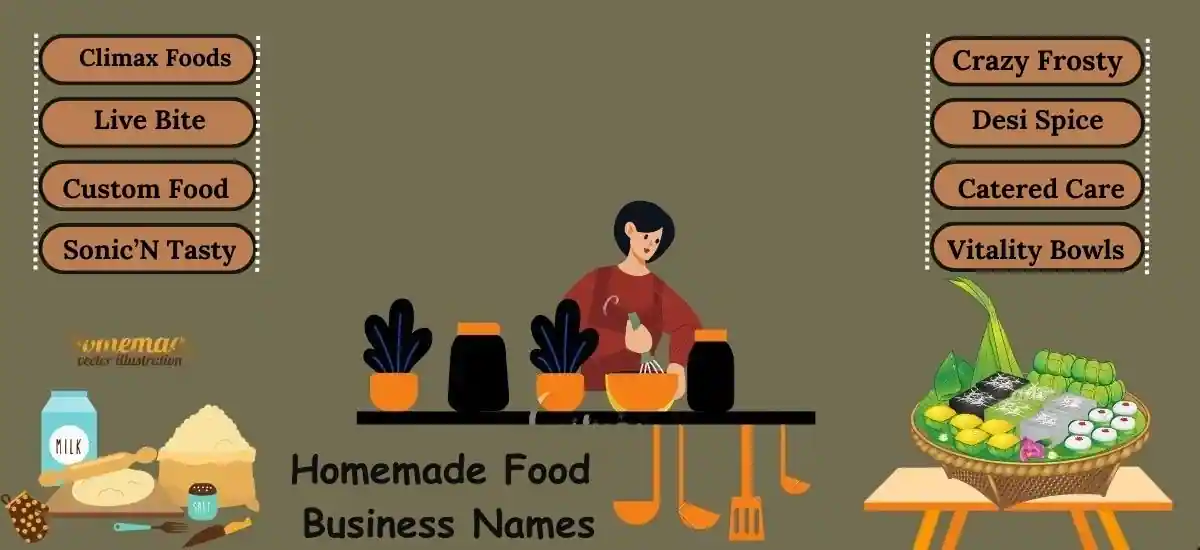
Food! It sounds divine!! Ah! We live for it. We all love food. Actually we live for our love for food.Loving food is great but think about making that to satisfy someone’s crave, that is more splendid thing we can ever heard off.
Homemade food is always the home, we want to come home to. So if you are owning a homemade food business, you are awesome.
Yeah I mean it, because homemade delicacies made me remind of my mom. I am sure everyone must feel the same.
So if you have already started your homemade food business I congratulate you from the core of my foodie heart. How can I pay my gratitude to you?
Let me help you scale your business somehow. How? Well, let’s start from the beginning and let me suggest you some awesome names. Let’s go!!
Homemade Food Business Names
IF YOU WANT TO REACH THE HEART OF THE EATERS:
The way to heart is through our tummy. Yes that works for all. These names are to prick the heart of the foodies out there
| Momma’s Kitchen | Cooque | Foodville |
| Home cooking | Feast House | Taste Ming |
| Comfort | Beyond Home | From My Kitchen To Yours |
| Home to Your Door | What’s to eat? | Love to Serve |
| Home cookery | Where’s mommy! | Eat Treat |
| Grandma’s recipes | Home Dining | Taste Buds |
| Mom Knows Better | Food with love | Eat home like |
| Who’s Cooking | Wish Dish | Way to home |
| Fast and Fresh | Home Flavor | BBQ Fast Food | A Food Historian |
| Curious Eating | Serious Lemons | The Diet Ones | Chai Ki Dawat |
| Stampede Pressed | Pacific Prime Foods | Glowing Rice | Vegetarian Dim Sum |
| Saucy Saucy Subs | Not Tasted Before | Growing Up Eating | Royal Grillz |
| Freshly Frozen Foods | Natural Blend | Healthy Foods | Completely Tossed |
| Sunrise Natural Foods | Power Kitchen | Happy Eating | Just Food Everytime |
| Be Equally Delicious | TLC Good Cuisine | Spoonful Philly | Maelstrom Of Dishes |
| Delight Fast Food | Mix Of Flavors | Sweet Flour Bake Shop | Cones Health Foods |
| The Winter Recipe | Adventure Eats | Pacific Grain & Foods | Coal Delights |
| Sweetnd Custom Cakes | Frenzy Of Eating | Frosty Frog HQ | Real Food Kitchen |
| A Kitchen Philosophy | Food Bank | Good Clean Chow | Spoonful Deli |
| Zak D Kitchen | Proper Food | Blue Plate Foods | Whole Foods Market |
| Natural Green Foods | Tasty Grills | Little Star | Cooli-O Frozen |
| A Blend Of Sweet | Candy Tastes Food | Make Them Tasty | Safeway Beltline |
| Warm Binge | Savory Addiction | Fried Chicken | Hodo Foods |
| Nutrition Central | Green Physique | Green Spice | Freshness & Bite |
| The Spoonful Bar | Wild Street Tastes | Crazy Chixy | Pleasing Purees |
| The Herb Mixture | Marina Kitchen | Kitchen Khana | Flower Child |
| Eat Simple | Happy Baby Eats | Kashmiri Dhamal | Exotic, Easy Eats |
| Mouth Foods | Scaffolding Racks | Baby Bliss Foods | Baking Budget |
| Earthy Secret | Qualifirst Foods | The Even Cooking | Panera Bread |
| Cheese & Pepper | Leafy Pastie | Best Choice | The Moody Chef |
| Tantrum Treats | SuccessFood Coop | Green Green Noodle | Busseto Foods |
| Spice Realities | The Incredible Café | The Spicy Oak | Stevia Sweet BBQ |
| Global Pet Foods | Soho Frozen Food | Soho Blend | Accent on Health |
| Curry Bowls | Herbal Science | Hungry Jacks | The Sweetest Cook |
| Food & Thought | Wrap U Tigh | The Yummy Jar | Deep Fry Them |
| Frosty Haus | Melted Cafe | The Bitty Bite | Super Crispy Bites |
| Desi Spice | Ventura Foods | In Season Purees | Upgrade Meals |
| Your Food Desires | Limu Power | Lane Bryant Farms | Tadka Tummy |
| Every Hour Eats | Blue Mermaid | Fast Home Cuisine | The Wolseley |
| Watson’s Health Foods | Rasoi Twist | Alpine Catering | Fratello Coffee |
- Pleasing Purees
- A Taste of Yocolatl
- Boucherie de Coop
- Velveted Tongues
- Grange Towne
- Vegas Sweetest
- Froyo Yogurt Bar
- Zak D Kitchen
- Cooli-O Frozen
Check More: Beautiful Witch Names With Meanings
IF YOU KEEP IT TO SOUND A LITTLE FANCY:
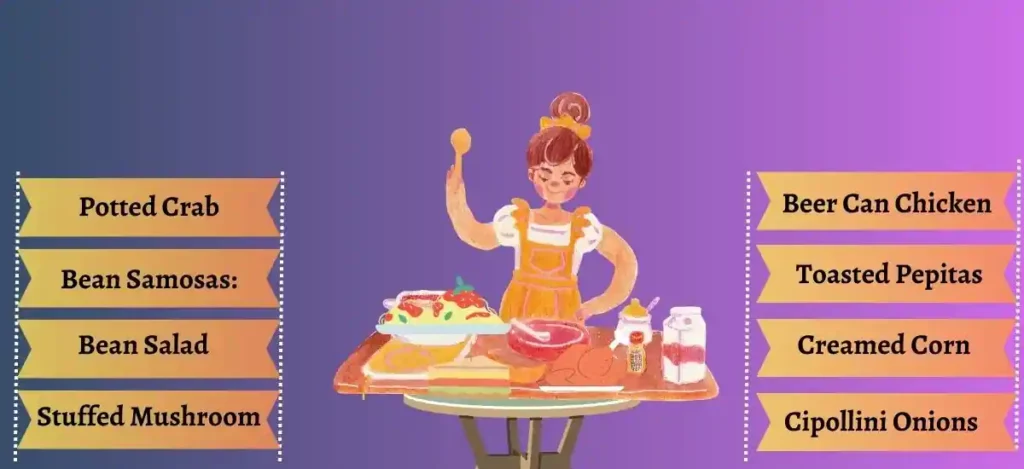
Homemade food business does not mean that you can’t get fancy names for your business. Here is a few check;
| The urban home kitchen | Caffeterra | Flavors |
| Casablanca | Foodie Fan | Food Remedy |
| Food Amore | Food Huggers | Food Coast |
| Urban Hands | Happy Fingers | Love Appetite |
| Eatwell | Taste Buds | Herbano |
| Food Fiesta | Flavvora | Limegrass |
| Tablespoon | Spicy Home | Ginger & Garlic |
| Food Hop | Green Chilly | Ice Spice |
| The Snacks & Colas | Whole Like Recipes | Steamy Budget | Hungry Helpers |
| Antidote Natural Soaps | Burgers Anonymous | The Fat Cutter | Pinch of Health |
| O’Neil’s Food Stores | Organic Quality Food | Royal Foods | Frosty City Fries |
| Sweet & Steamy | Snack Zillas | Vintage Food | Succeed Food |
| High Melting Pot | Lake City Foods | Sweet Loving Palate | Great Vegan Eaters |
| The Minimalist Recipe | The Spice of Sea | Kern Honey | Traveling Tots Foodie |
| The Yogurt Chick | Earth’s Bounty | Food Finders Inc | Food Hearted |
| Heady Mixed Spices | Minty Khana | Zestful Grub | Slices & Spread |
| Dulci Spoonfuls | Ghoulique Rougiou | SLO Natural Foods | Anam Restaurant |
| Hot and Spicy | Sweet’ Popping | Vegas Sweetest | FABQ Season |
| Blue Bird | Cool Refrigerated | Mountain Produce | The Classy Bytes |
| Hungry Volcano | Back To Basics Food | Arbonne International | Food Cart Franchise |
| Sangli Group | Honey Crepes | Family Foods | Perfection Pet Foods |
| Global Green Foods | Key to Health | Own Original Curry | Platinum Spoonful |
| The Majestic Kitchen | Hotel The Savoy | The Spoonful Lady | Across This Recipe |
| The Recipe Watch | HenEggMattic | Catered Care | This Delicious Side |
| Red Oaks Supply | The Freshion | Home Style Cooking | Spoonful Marketplace |
| Simply Elegant | Glamour Foodie | Street Harvest | In the Sky Sustenance |
| Nestle Dreyer’s | A Perfect Roast | Visionary Catering | A Taste Wish |
| The Rice Kitchen | Custom Food | VIP Food Truck | Natural Rewards |
| Saffron Flavors | Cooked With Care | Just Plucked Trees | Slices Chocolates |
| Sultans of Pulp | A Meal Experience | Habib’s Kitchen | Meat U There |
| Tot’s Easy Eats | Homemade Gourmet | Natural Kitchen | The Food Healer |
| A Salad Special | Frothy Froth | Dare Foods Ltd | Nutrition Zone |
| Tandoori Grill | Mughlai Mave | Freedom Foods | A Complete Meal |
| Taste of Temptation | Taste of Tasty | Meat Monarchs | Toddler Cuisines |
| Pure Vintage Food | Health Dash | Totally Spoonful | The Lunch Homes |
| Choose the Best | Thomas Fresh | Slice-N-Spoon | Gourmet Slices |
- Edena’s Supermarket
- Potsy Flavor
- Eglafyummy Spoonful
- Soba 101
- Chutney Chooks Cafe
- Sami’s No Frills
- Taste of Tasty
- Ready Pac Foods Inc
- Revolution Foods
- Pulmuone Foods
YOU CAN RELY UPON OTHER LANGUAGES TOO:
Want to name your homemade food business after some name that sounds cool but aren’t English?
Let’s have a look:
| Cibo Home Kitchen | Bechamel |
| Love Comida | Fricassee |
| Fudo | Cassoulet |
| Canyin | Aperetif |
| Rebozar | Chiffonade |
| Exquisito | Amuse Bouche |
| The Food Dudes | Butter Baker | Putting Up Recipes | The Steaming Hot |
| Air Source | Frosty Couture | New Inner Healing | Simmer & Cook |
| A State Of Flavors | Good Food Wishes | A Cooking Tour | Young Life |
| Nutrition Depot | Pop The Blender | Revolution Foods | Crazy Frosty |
| Evergreen Healing | Tadka Gully | Tree of Life | Nin Com Soup |
| The Idea Of Eating | Blended To Smooth | Feasting Barefeet | Fit People Proof |
| Frozen Food Empire | Potsy Flavor | Done Medium Rare | Very Delicious Loaf |
| Paved Sustenance | The Spoonful Deli | Black Pepper | Thai Sizzle |
| Fibre Brew | That Noodle Thing | Industry Kitchen | Heartland Society |
| Land Up Eating | Skinny Recipes | The Veggie Valley | Papaya Fusion |
| The Capital Grille | Revolution Foods | Foster Farms | Food Processors |
| New Level Brewing | Indian Street Food | The Raw Blessings | Cookery Gully |
| Cafe Coyote | Tandoori Grill | Pulmuone Foods | Frosty Frosty |
| Boucherie de Coop | Pizza Factory | Clean Juice | The Flavor of Home |
| Vegan Kind Life | Maple Leaf Bakery | Fast Food Table | Toppings Of Desire |
| HCG Elite | The Bowling Pot | Frite Marche | The Natural Sweetness |
| Desi Dawat | Bingo Food | Foodies Restore | The Market Eatery |
| Fresh Express | BBQ Fast Food | The Health Nut | Sun Fresh Produce Inc |
| Cleaned & Fresh | Tasty Fish | Optimum Health | Saucy Sub Sandwich |
| Vitamin World | sushi hut | A Dish To Serve | The Drop Station |
| Get with Advo | Starving Sidewalk | The Nutrition Store | True Food Kitchen |
| Cooking Fatafat | Capital Delights | Mess Hall | Success Food Mart |
| MasterSlices | SavorIT | Classic Gravy | Life Health Foods |
| A Wonderful Meal | Out To Lunch | On Fire Roasting | Street Food Stuff |
| Nutrition Station | Serra Foods | Frosty N’ Craved | Curry Cooking |
| Valley Snack Foods | Gravy Food | Save-On-Foods | Bite My Rice |
| Bread and Mercantile | Red Chillies | Better Choice | Wanton Dynasty |
| Juice Press | Moonlight Burgers | GreenGrow Foods | Taste A Lot |
| ReadyWraps | alpha wave Food | Herbs on the Lake | My Messy Kitchen |
| Oak Food | Toscana 49 | Delicious Nutrient | The Taste Buffet |
| First To The Finish | Fireplay | Quickey Snacks | Blue Lupine |
| Refreshment Vegetarian | Pasta Street | Sweet House Treats | Big Burritoz |
- Tree of Life
- Nutri-Go
- Thomas Fresh
- Hungry Volcano
- Community Natural Foods
- Fresh Direct Produce Ltd
- Direct Plus Food Group
- Cold Garden Beverage Company
- Save-On-Foods
- Dawn Foods
- Alpine Catering
- Wild Rose Brewery Ltd
- I Like Tasting
NAME IDEAS WHICH ARE RELATED TO THE ULTIMATE THING; FOOD:
No, you can’t rely on food synonyms to your business name sound cool. You must know some terminologies which are involved entirely with the term “Food”
| Bouffage | Triclinium | Poach |
| Smell Feast | Consomme | Tempering |
| Groak | Searing | Confit |
| Tarnisher | Deglaze | Puree |
| Forenoons | Meringue | Marcerate |
| Rassasy | Saute | Polenta |
| Speustic | Bisque | Butterfly |
| Swage | Caramelise | Fromage |
| Good Clean Chow | Titan Food | Crusty Food | Wellness Dinner |
| Crunchy Cook | Key Health Systems | Cooked Up Po | Secret Dish Place |
| Great Australian Drive Thru | Magicast Food | Two Fork & Peas | Mamma’s Macarons |
| The Health Market | Burger Raffles City | I Got Hungry | The Spoonful Boy |
| Master Fish | Nutrition Bomb | The Food Season | Clean Eating Hack |
| Lunch Line | Meal Miles | Desserty | The Food Shop |
| Eat Pretty Food | Doremon Food | Creamy Dream | Infusing The Sweet |
| Wrap U Tight | Food Cart Franchise | The Bottle Booth | Freedom Foods |
| Organic Quality Food | nature taste | United Natural Foods | Fine Foods |
| Fast Repast | Metro Cafe | BetterFoods | Box Catering |
| fortman Food | Home Flavor | Chilli hook | Spice Alley |
| Dash of Delish | Global Food & Nutrition | Delight Fast Food | The Moody Chef |
| Crunchilicious | Baby Gourmet Foods Inc | The Healthy Butcher | Nutrition Station |
| Brewed Awakening | Freshies | Fast ‘N Fresh Fries | Transform Kitchen |
| Lunch box Food | Xoong | Ready Roast Nut Company | Food Forward |
| Desi Spice | Lunch Bunch | Pacific Spice Company | Aces Ocean Foods |
| Chewy Balls | Alpine Catering | Advanced Foods Place | Eat Fit Food |
| Minuteman | Meet’n’Eat | Faster Food | Green Mushroom |
| Lunch Bag | Admond Food | American Food | Urban Bites |
| Express Eats | My Messy Kitchen | Plate Palate | Global Food & Nutrition |
| Black plate Food | Bow River Meat Market | Home Style Cooking | Mess Hall |
| Bala Baya | Burgers Anonymous | Oak queen Food | Modern Market Eatery |
| Le Chef | Food Finders Inc | Creamy Dream | Protein Bar |
| Platinum Food | King Taco | Abco Laboratories | Union Kitchen Grocery |
| Scotchtails | Home Made Food | Fico | Immigrant Food |
| Tacos Parked | Union Kitchen Grocery | Fine Foods | Frozen Vegetables |
| Advanced Food Products LLC | Pricious Food | Healing Roots | Bread and Mercantile |
| Cavern Cooks | Marshal & Marston Foods | Fine Food Stop | Captain Cook’s |
| Pacific Grain & Foods | Drive Through | Valley Snack Foods | Tandoori Caterers |
- Taste of Temptation
- Succeed Food
- Toasted Thai
- Platinum Spoonful
- Visionary Catering
- Office Gourmet Catering
- Citizen Brewing Company
- Healthy Chef Delivery
- Foods Superior Corporation
- Dare Foods Ltd
- Sun Fresh Produce Inc
- Good Mood Brewery
- Global Pet Foods
- Sweetnd Custom Cakes
- Food Agency
- New Level Brewing
- Fresh Start Foods
- Safeway Mission
- Tandoori Grill
- Blaze Pizza
IF YOU WANT TO CARRY THE TERM “HOME” SOMEWHERE:
As this is a homemade food business, you may wish to use the term somewhere either in the suffix or the prefix of your business name. Well I have some wonderful ideas. Look!
| Home Spun | Flavors of the House |
| Home food Craft | Home kitchen |
| Home Appetite | Dining at Home |
| Home Grown | Home Table |
| Home Food Fabrication | Home Bakes |
| Home Artifice | The Home Cuisine |
| Home baked | Home Pro Foods |
| Home like | Like Your Home |
| Upscale Food | Zero Restaurant | GO Foods | Food Cart Franchise |
| Fresh To Go | kitchen cave | Sweets from the Earth | Alliance Select Foods |
| grady Food | Krispy Crunches | legency Food | Food Panda |
| Dish for the King | Barefoot Bar & Grill | Just A Minute | Food Innovation Network |
| Cook County | Mr. Jolly | Mr. Happy’S Burger | Proper Food |
| Natural Food Company | Revolution Foods | Cooking Corner | Saucy On The Go |
| Food Processors | Fried Chicken | Lavoya Diner | Stampede Pressed |
| Home Flavor | Red Chillies | ThaiTrue | Cool Refrigerated |
| Fresh Kitchen Foods | Quality Fast Food | Imperra Food | Spoonful Deli |
| Homemade Food Systems | Fish & Chips | Burger Barn | Taste It With Me |
| Life Health Foods | Desi Spice | Salad Heaven | Toddler Cuisines |
| Delicious Foods | Delight Fast Food | Aces Ocean Foods | Big Burritoz |
| The Food Shop | Black Pepper | Spot the Taste | In the Sky Sustenance |
| Freshly Frozen Foods | Crispy Fried | Road Side Fast Food | Lids Locks |
| Global Green Foods | Burger & Beyond | Healthwise Foods | Delicious Nutrient |
| Friends Bite | Quick Bites | Homey Meal | The Taste Buffet |
| Foods Clear | Pepper Lunch | Street Vittles | Fresh Kitchen Foods |
| Advanced Foods Place | Burger Raffles City | Burger bing Food | Bistrio Food |
| The Freshion | Lord of the Fries | king spoon | Meal Diary |
| Homemade Foods Present | BBQ Fast Food | The Booth | Mr. tatse |
| Family Foods | Thirsty Bird | go mom Food | Food Quest |
| Secret Dish Place | Harbour Food Court | The Amazing Kitchen | Taste Buds |
| Nutrition Zone | Hungry Jacks | Community Natural Foods | Family Secret Recipe |
| Pure Vintage Food | Burgers Anonymous | Delta Food | Bankers Hill Food |
| Natural Green Foods | Slice-N-Spoon | Wrap Food | Frosty City Fries |
| Burger World | Sly Mein’s Deli | Soucy Sub | Tasty Tot Treats |
| Super Kitchen | Frosty Frog HQ | Frosty Couture | Spicy and Spicy |
| The Health Market | Saucy Subs | Sai’s Asian Kitchen | Frosty Love by Kelly |
| The Health Nut | Our Spoonful Kitchen | Frosted Flutters | Twist n’ Treat |
- Kiss Me Kebab
- Papaya Fusion
- Mimi’s Spoonful Cafe
- Frozen Chix
- Zestful Grub
- Success Yum
- Taste of Tasty
- Frosty Love Foods
- Cutscrafters
- H2k Culinary
- Albatross Sushi
IF YOU WANT TO MEAN KITCHEN:
Food is all about a good kitchen and you can’t deny it. Our Home kitchen is the ultimate source of the wonderful and tasty dishes we savor. So let’s see what I got in this section:
| The Home Pantry | Behind the Kitchen | Food Wardrobe |
| Cook Room | The Chef’s Cabinet | Food Cupboard |
| Home Food Gallery | Home Canteen | Food Sanctuary |
| Cooking Stove | The Dining Room | Food Shelter |
| Deep Freeze | Cabinetry | Food Maker |
| The Lost Kitchen | Frosty On the Go | Berry Good Bites | Savorful Rice |
| The Master Chef | Mamma’s Macarons | The Spoonful Lady | Sobel Deli |
| The Nutrition Store | Spinach-Eggs-for-Ups | A Taste of Subs | Food Fair |
| The Plaza Food Hall | Elite Spoonfuls | Saucy Sub Shop | Herbal Connections |
| The Rice Kitchen | Baby Bliss Foods | Happy Baby Eats | Urban Dairy Foods |
| The Spicy Oak | Trusted Tot | Slice It Up Deli | Nutrition for Life |
| The Walkup Wagon | Saucy Saucy Subs | Gourmet Slices | Pure Food Supplements |
| The Whistle Stop Cafe | Swirls of Sugar | Frikker Froyo | Key Health Systems |
| Tiny Tarts | Glamor Subs | Frosted Shakes | Refreshment Vegetarian |
| Toasted Ping Thing | Pancake Deli | The Taste Deli | Best Choice |
| Toscana 49 | Taste Of Cuttings | Small Mouth Menu | Feeling Hunger |
| Transcending Food | Success Bites Eatery | Bloor East India Pot | Cooking Journal |
| Unique Taste House | KoolFrost & Co. | K & Z Taste Tours | Hungry Helpers |
| Uno Pizzeria & Grill | Lane Bryant Farms | Frosty’s Fresh Food | Home Meals |
| Upscale Food | Hairy Pot | Bespoke Spoonfuls | Community Natural Foods |
| Vintage Wave Food | O. Subs | Frosted Foodz | Fast Home Cuisine |
| Whiter Food | Sub Station Super | All About Spoonfuls | Big Eats Delivery |
| Safe Food Alliance | Sunora Foods Ltd | The Flavor of Flavor | Fratello Coffee |
| Round Table Foods | Trophy Foods | Cravins And Cotswold | Safeway Beltline |
| Home Made Food | Fine Food Stop | Thai Sizzle | Simply Elegant |
| Capital Delights | Worldwide Specialty Foods | Nett Wij Dis | Back To Basics Food |
| Wild Rice | Planet Foods | Frosty Foodie Cafe | Galant Food Company |
| The Drop Station | Westrow Food Group | Frothy Froth | Blossom Valley Foods |
| Dulci Spoonfuls | Vantage Foods Inc | O’Neil’s Food Stores | Golden State Foods |
| Spoonful Gallery | Baby Gourmet Foods Inc | Frosted & Delivered | Dole Food Company |
| Twelve Crust Eatery | SUN FOODS LTD | Exotic, Easy Eats | Valley Snack Foods |
| Kona Sub | Old Dutch Foods Ltd | Warm Binge | Scented Subs |
| VIP Food Truck | Dashing Dishes | Miss Spoonful | Souperie Montréal |
| Frosty Girlz | Bow River Meat Market | Spoonful Marketplace | Taste-A-Cut |
| Ghoulique Rougiou | J & D Food Services | Scaffolding Racks | Nearly Homemade Foods |
| Vermont Pimpineers | Tree of Life | Taste of Temptation | Kiss Me Kebab |
- Strip N’ Grind
- Oz Juice Centralie
- TLC Good Cuisine
- Journey Chee-Eat
- Green Green Noodle
- Frozen Food Empire
- The Taste Rush
- MasterSlices
- Potbelled Treasures
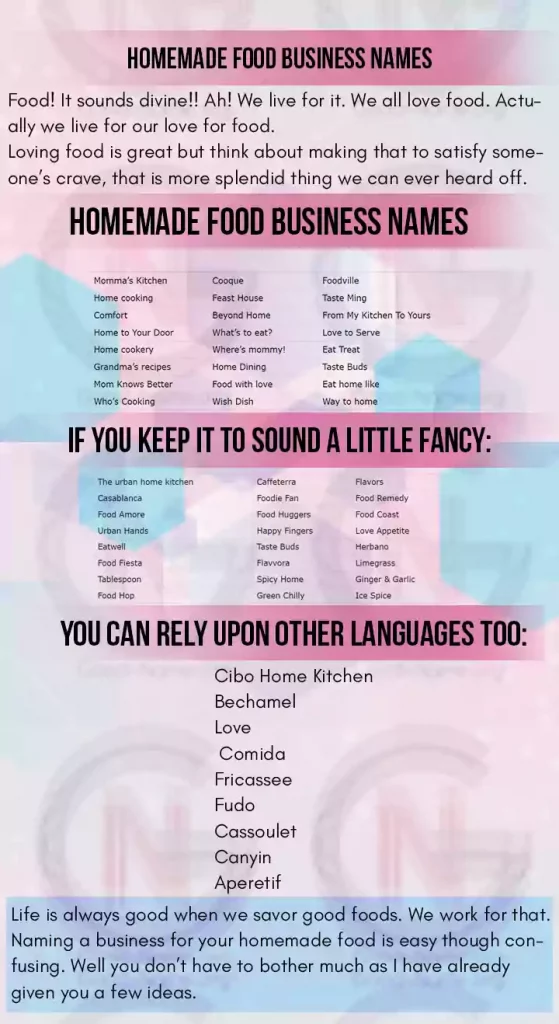
Life is always good when we savor good foods. We work for that. Naming a business for your homemade food is easy though confusing. Well you don’t have to bother much as I have already given you a few ideas.
Name your business and all the best. Happy Cooking!!
Also Read:
Best Loxodon Names
Good Username For Roblox
Catchy Vampire Name Ideas
Preppy Boy Names
Funny Curling Team Name Idea
Cute Hamster Names
Best Dragon Names
Blue Team Name Ideas
Unique Instagram Username
Best Eladrin Names
Best Gamer Tag Name Ideas